:
.
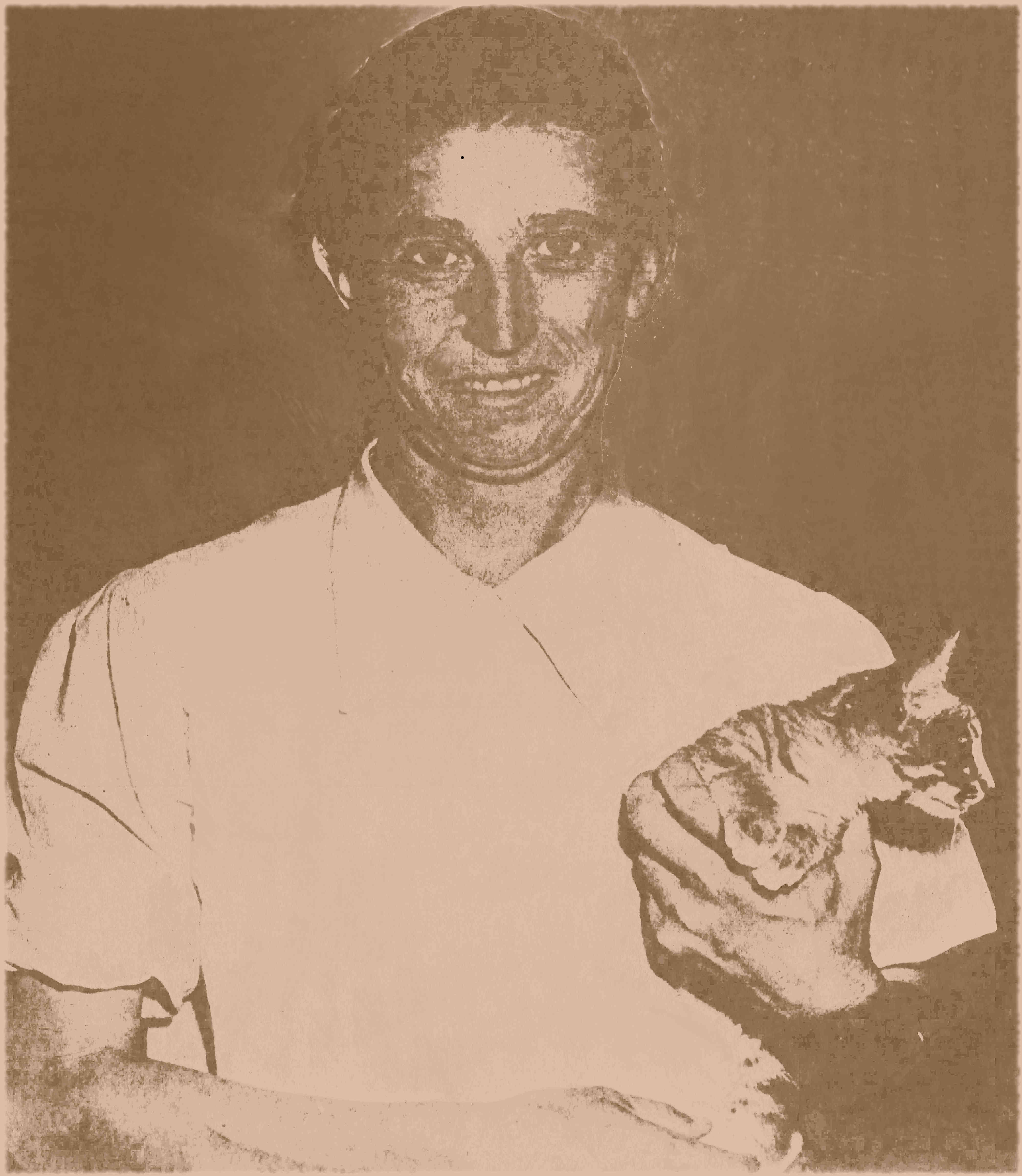
Maria da Encarnação, the only woman on board, was almost hysterical when she was picked up by the American warship.
(Naval War Diaries – NARA)
On June 7, 1943, the sea was rough and the wind was strong. Everything indicated that the storm would worsen that night. On the small “Carioca”, an open fishing boat – with a lateen sail – just over eight meters long, despair was growing.
Of the nine people on board, only one had any seamanship experience and none of them had any idea where they were.
They signaled a plane with a white towel, but it seemed it had not to see them. For two days, the water had been jumping over the low gunwale and growing at the bottom of the hull. All that was left of food was a bit of cheese and some lemons. The fresh water was running out.
It was around nine o'clock at night when they were spotted by the American destroyer “USS MacCormick”. Commander Owens noticed the small boat in the swell and, knowing the difficulties that were coming, did not hesitate to pick them up. Eight men and one woman – almost hysterical – climbed aboard. They were all Portuguese and were trying to reach Casablanca, in Morocco, where friends had assured them that it would be possible to find work.
“All members of the group are residents of the Lisbon area. Each of them assured that they had left Portugal because they were not eligible to work due to their reluctance in joining the Portuguese Legion, an alleged fascist organization,” wrote the commander of the “MacCormick” in the confidential report explaining the events. The Portuguese Legion was in fact a fascist paramilitary organization.
The small boat, which had been at the mercy of the elements, was bought with the money that everyone had gathered and prepared for a 72-hour voyage.
“They left Lisbon on June 4, 1943. Planned to go down the coast to Cape Sines, then turn away, pass Cape St. Vincent and head back inland, hoping to reach the African coast, and Casablanca. However, late in the afternoon of the 5th, they encountered strong winds and seas and were pushed to the southwest,” explained Commander Owen.
This group would never reach Casablanca, but that North African city was an important attraction for Portuguese people seeking a better life. Every year, men and women would set off from the Algarve to spend a few months working in manufacturing or fishing in what was then French territory.
Every year, boats were stolen off the Portuguese coast for men and women to cross to Casablanca where they hoped to find work and better living conditions, even during the war.
Portuguese portraits
The interrogation carried out by the Americans revealed a portrait that allows us to learn not only about the physical characteristics but also about the political commitment, beliefs and hopes of each of those taken from the “Carioca”.
João Rodrigues Sério, aged 29, had left his wife in Lisbon. He intended to call her after settling in Casablanca. According to the captain of the “McCormick”, he declared himself an “anti-fascist because, apparently, he associates the fascist powers with his economic difficulties”.
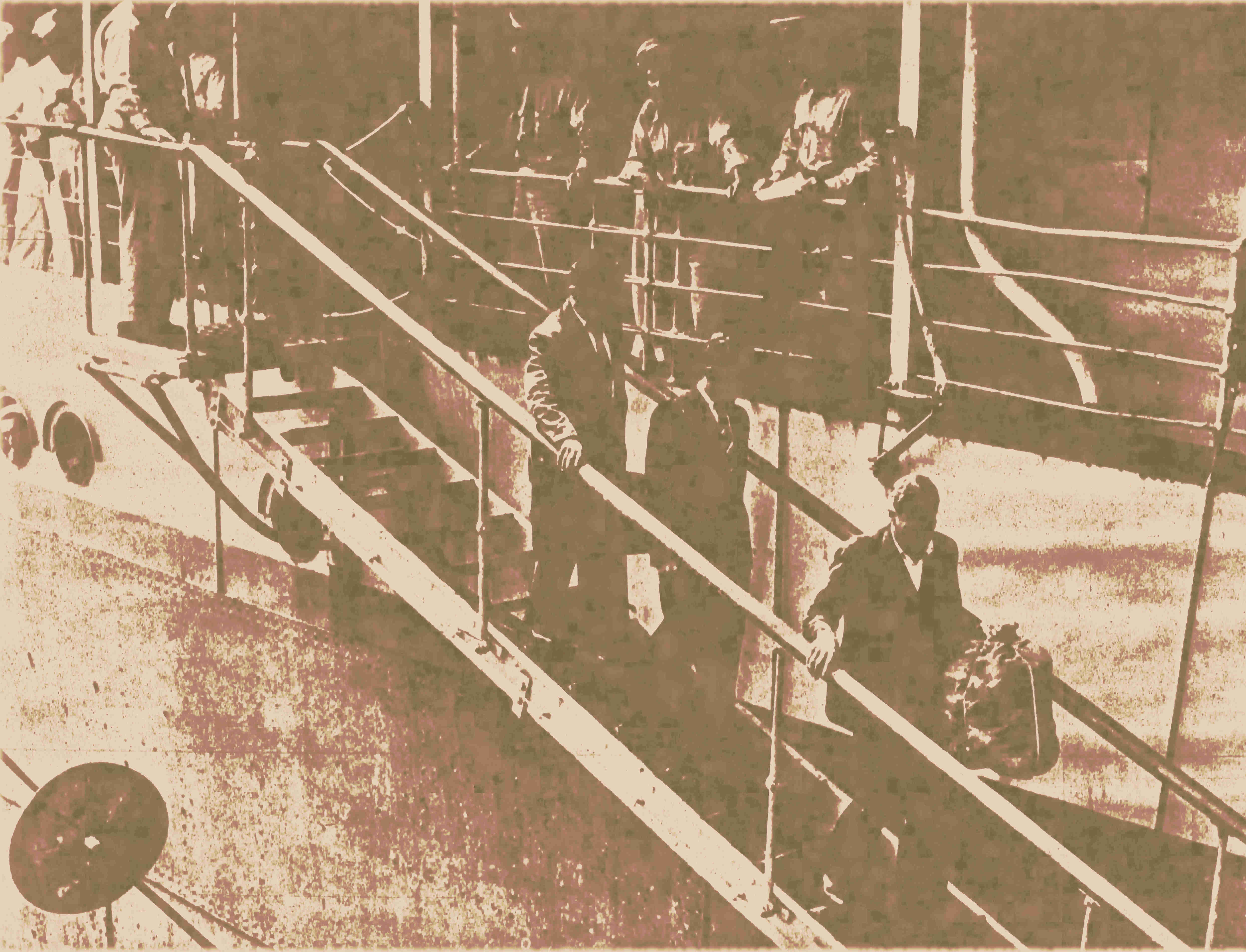
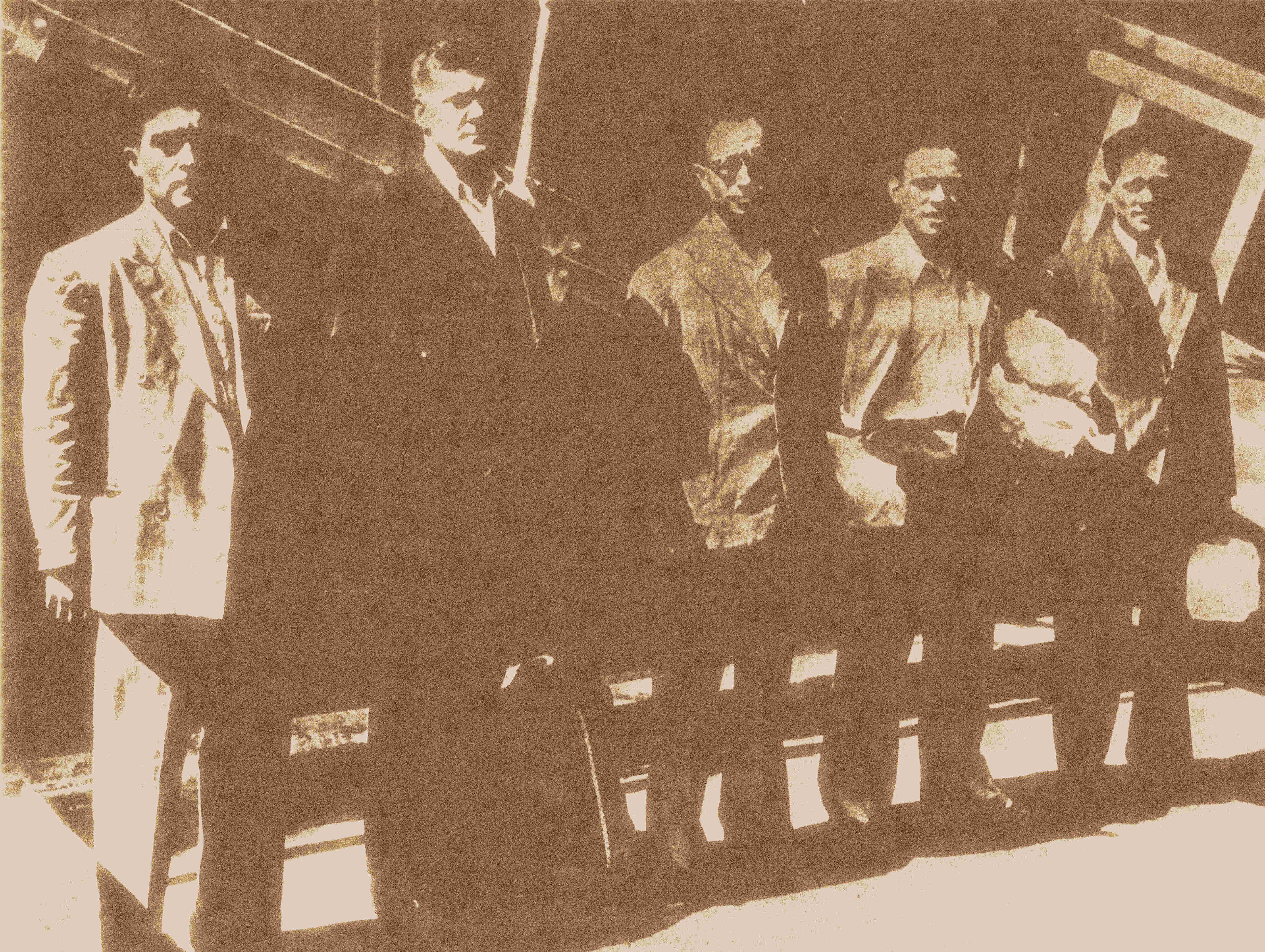
The Portuguese disembarking from the "USS Tarazed" and at the Norfolk naval base in the USA.(Naval War Diaries - NARA)
Simplício da Encarnação and his wife Maria were the only couple on board. They had no children. At 40 years old, he “has no political convictions” and is “illiterate, and therefore a poor source of information”. About Maria, ten years younger, we know that she had worked in a textile factory and not much more.
Francisco Águas, aged 33, had already tried to emigrate. He had written to the British embassy asking for a travel permission, but in response he learned that the Portuguese government did not allowed his departure. That's why he opted for this solution.
José Vicente Leal, 57, had left his wife and nine children behind. He also hoped to bring his family to Casablanca later. Had little interested in “political philosophies” and explained to Commander Owen that “government is food for the belly and a home for the family”.
The wife and three children of Hermínio Albano, aged 43, had also stayed in Portugal and after the rescue he was excited about the possibility of exchanging a life in Morocco for one in the United States.
António Gonçalves Rosa, aged 28, was divorced, but had left a girlfriend in Lisbon. He had no political connections but had already “been threatened with arrest for wearing an RAF pin”.
The last two passengers on the “Carioca” knew the United States and had worked there.
Caetano de Almeida had done so in 1941 and 1942. He returned to Portugal to help his sick daughter and had been prevented from leaving again by the Portuguese authorities. He was a widower, but had found a new wife who, at the time, was pregnant. At 43 years old, he assured not only that he was going to call his family to Casablanca, but wanted to get married.
The most “talkative” personality of the group was José Rodrigues. At the age of 47, he had already driven taxis, worked in factories and sailed on a ship. He had served in World War I as a sergeant in the Portuguese army and had emigrated to Boston in 1919 to work in a shoe factory and a sugar refinery. He had American nationality.
Rodrigues was “a strong anti-fascist, a member of what he called the Republican Party and an informant for the British secret services”, the report sent by “McCormick” stated. During his interrogation, he admitted that he had already been arrested for involvement in political agitation.
In his portrait of Portugal, he reaffirmed - like the others - the difficulties in finding paid work for those who were not members of the Legion. On the other hand, he assured that there was great effort by Salazar’s government to recruit volunteers for the “Blue Regiment” (Blue Division) - a Spanish unit that fought alongside the Germans on the Russian front - or to emigrate to Germany.
“In both cases, the government pays for the trip, and members of the Spanish Navy who return injured receive a government pension,” he is said to have assured.
His stay in Portugal was related to a visit he had made to his sister in 1922. Subsequently he was also prohibited from leaving by the Portuguese authorities.
Owen concluded that the castaways “expect to be welcomed to America both to work and to be recruited into the army.” Either solution seemed to please the small group.
The end of the American dream
Ten days after being picked up, McCormick was transferred to the “USS Tarazed” which left them – on 24 June – at the Norfolk Naval Base in Virginia. The photographs illustrating this article were taken during the disembarkation.
Handed over to the International Red Cross, they presented themselves two days later to the immigration commission, which rejected entry into the US of almost all of them because they did not have the necessary documents.
Perhaps because he had American nationality, or because he provided information to the allies, José Rodrigues did not return to Portugal. The rest would return to the country. On 22 September the newspaper “Diário de Lisboa” reported the arrival of “eight of the nine Portuguese individuals, who left some time ago, in a small boat, with the desire to go to Casablanca”.
“Upon arrival in Lisbon, they were handed over to the International Police, to resolve their situation of attempted illegal emigration. Afterwards, they will be questioned by the Maritime Police, regarding the case of the boat in which they were traveling and which belonged to Mr. João Alves.”
Carlos Guerreiro
Sources:
NARA § Diário de Lisboa § Arquivo de Marinha
