.
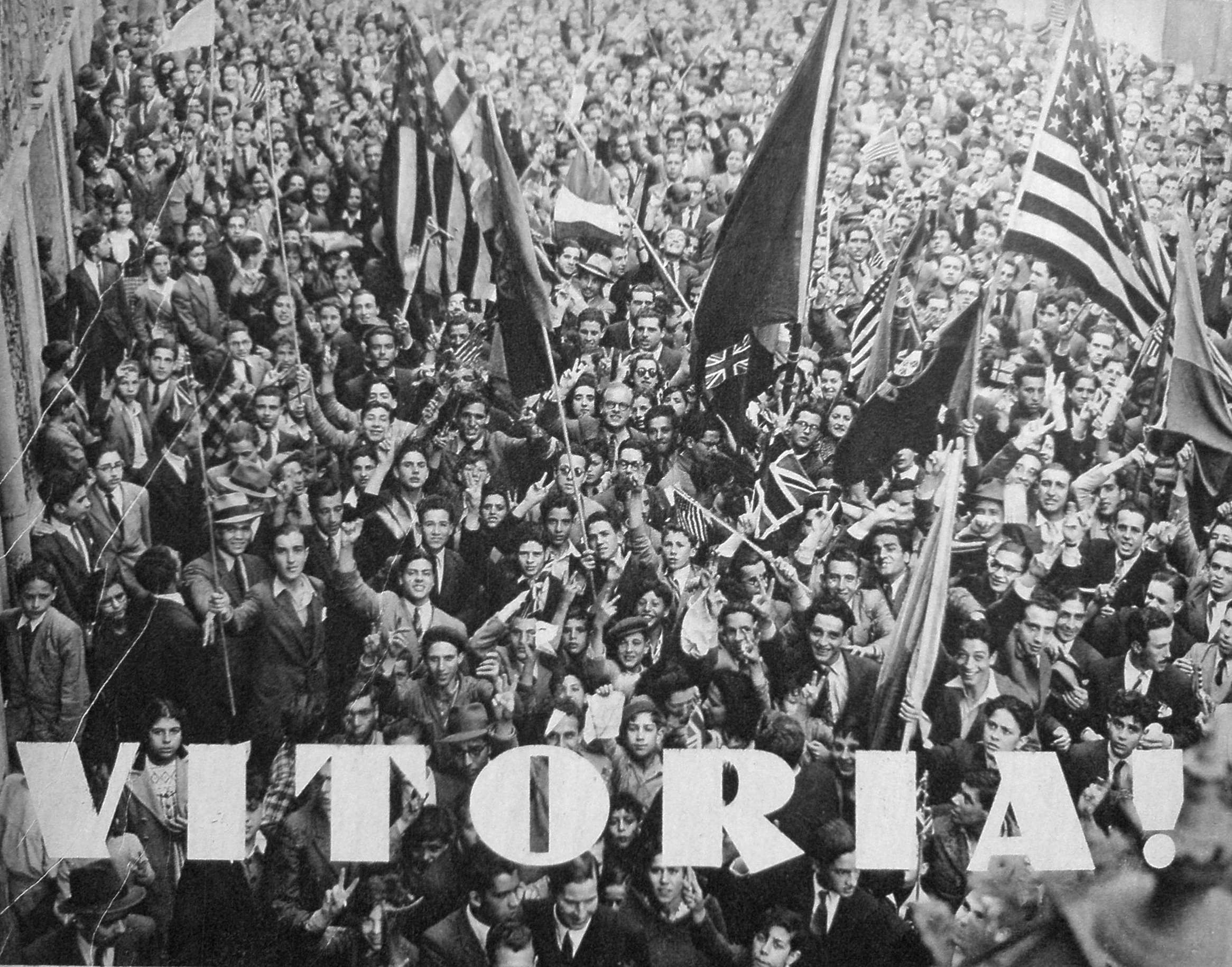
Victory celebrations in front of the British Embassy in Lisbon
(Revista "Mundo Gráfico" magazine/ Hemeroteca Digital)
“Viseu has just witnessed a demo-communist demonstration, in which the situation was so serious that the city was and is rightly alarmed”. These are the highlights in the opening lines of a report from the Portuguese Legion - a paramilitar organization of the Portuguse Government - in that northern city, which leaves no doubt about the concerns that the celebrations of the Allied victory in WWII are causing.
In May 1945, the victory of the democracies and communist Russia made the pro-Government men fear the worst, both in Viseu and in other Portuguese cities. There were fears of a coup d’état, supported by the British or Americans, and the way in which the crowds were embracing the celebrations did not give anyone a peace of mind.
The Portuguse Government was a nationalist dictatorship since 1926 and had developed ties to other nationalistic regimes in Spain, Italy and Germany.
As soon as the news of the Axis surrender in Europe became public, on the afternoon of May 7, the streets filled with people in the cities, towns and villages throughout the country.
There were fireworks and mortars. Bands and marching bands took to the streets by their own decision or at the request of committees formed to lead the festivities. Many of these organizations quickly fall under strong suspicion of the authorities.
The inability to regulate and control the growing demonstrations did not help in these early hours either. In some municipalities, everything is allowed, while in others nothing can be done.
Portalegre, for example, didn’t see its band take to the streets because the mayor had “well-founded fears that the event would be used to express subversive ideas or ideas contrary to the current political situation”.
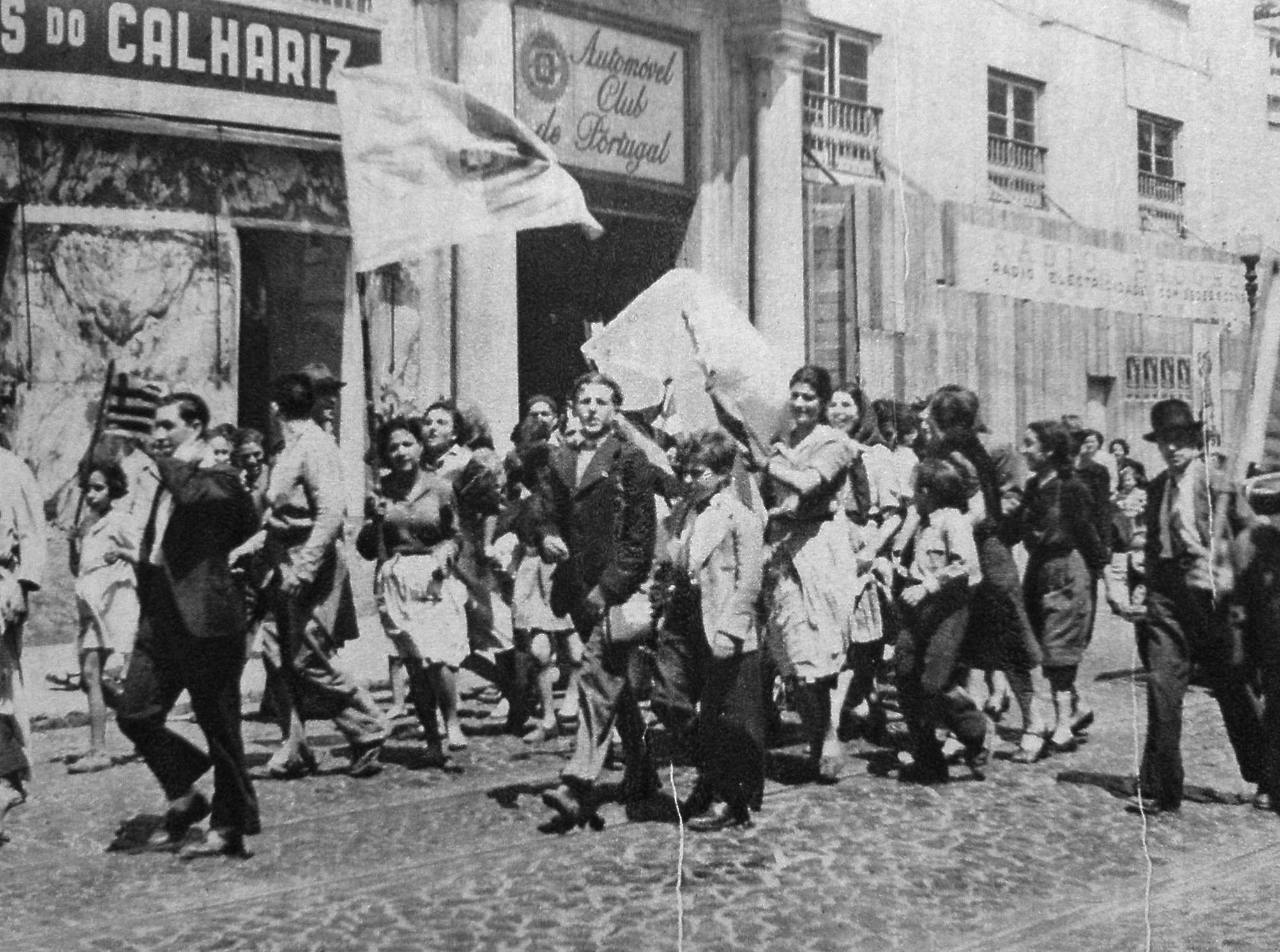
.
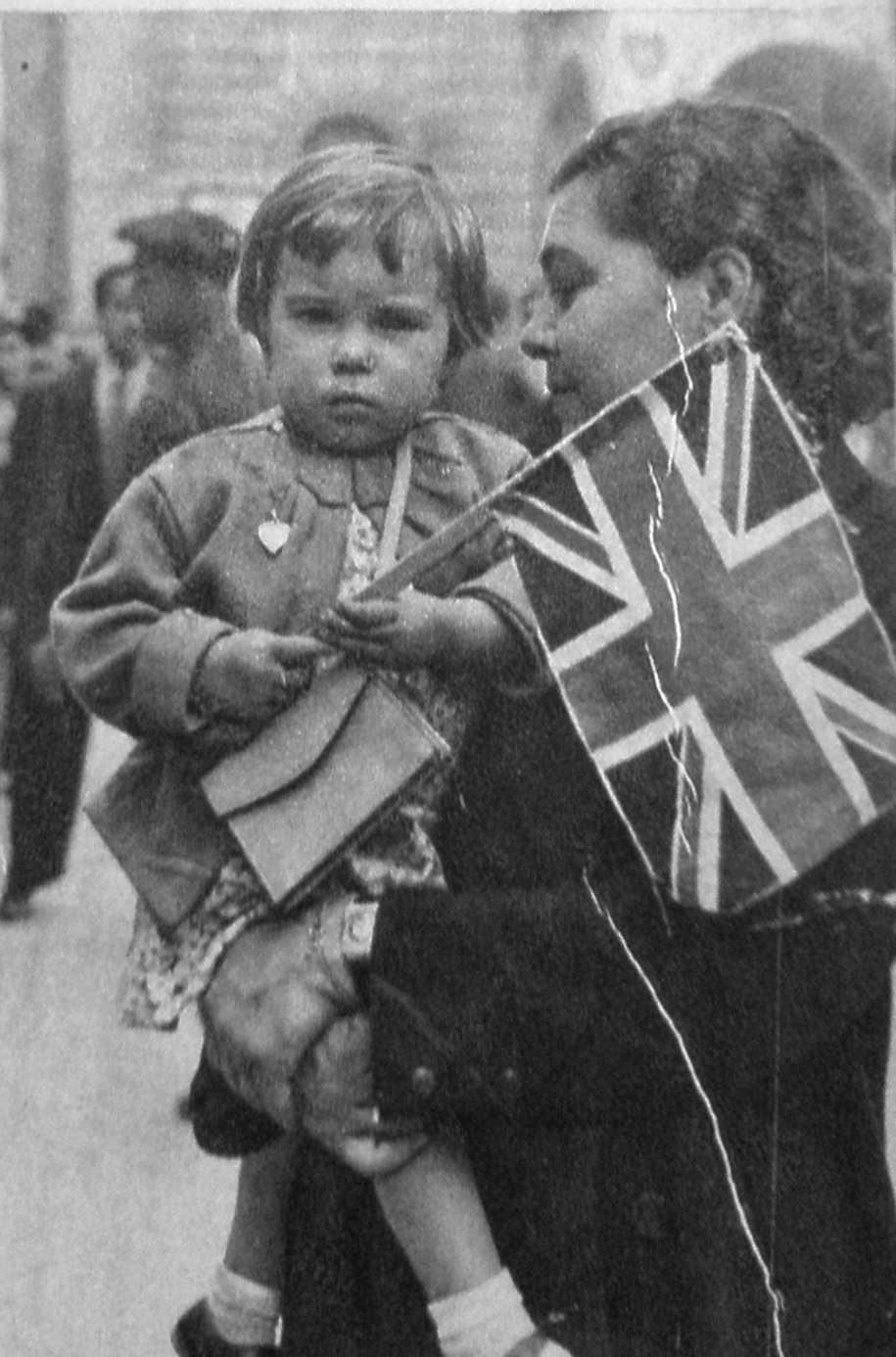
More celebrations in Lisbon.
("Mundo Gráfico" magazine/ Hemeroteca de Lisboa)
In general, on the 7th, the festivities were spontaneous, with a more popular character, with many “cheers”, even though “after the cheers, we started to notice the drinking that lasted all night long”. New celebrations were scheduled for the following day, especially in the larger towns and, in this case, a certain level of organization was already noticeable both on from the committees and from the authorities, who started coordinating their actions.
Fear of the Allied Victory
The fear of the internal consequences of a defeat of the fascist forces in Europe is evident in several reports that reached the Portuguese Ministry of the Interior, especially during 1944 and 1945.
“After the last events of the war (the outrageous death of Mussolini and the capture of Berlin by Russian troops), there was an excessive joy in certain sectors, where barely contained hatred, personal grudges and hopes of political subversion in Portugal surfaced”, explained the already mentioned report from Viseu.
In other places, the men of the Situation (as the Government men were known) were also apprehensive.
“The well-known agitators of Entroncamento (…) are walking around with their ears pricked up and quite excited. They gather in groups to discuss the events. (…) The men of the Situation are frightened and are showing kindness to their adversaries. It is said that at war end, the Government changes. That the Allies are imposing their form of Government (democracy) on other peoples”, summarises a police report from September 1944.
The same document also states that many local leaders “are terrified, which clearly demonstrates why, perhaps expecting any setback, they are making deals with people who are known to be against the government.”
The approaching end of the war is seen as a potential threat.
“Silvino Diogo (…) told someone that he had a «black list» at home, which had been given to him by the Americans, which contains the names of people from the government and Legionnaires who were to be killed,” reveals one of the reports from the Surveillance Services of the Portuguese Legion in Lisbon, dated 7 May.
In another report from the Legion, dated the 5th, the challenge of a certain Medeiros is highlighted. In the middle of Salão Brasil, on Rua Augusta, in Lisbon, he allowed himself to “make several vexatious statements (…) commenting on the fact that the National Flag was at half-mast as a sign of mourning for Hitler’s death. Thus, in a loud voice, saying he was not afraid of what would happen to him, he insulted the President of the Council, calling him a “son of a bitch”, as well as all the members of the army and Legion”.
“In Coimbra, on the night of the 3rd of this month, more than 500 mortars were fired in order to celebrate the fall of Berlin. It is assumed that the anti-situationists were the ones who carried out this demonstration”, highlights a report from the Legion, while another notes the placement of the “red flag with the hammer and sickle on the post of the 3rd section of the National Highway Comoany” in Queluz, on the night of the 6th to the 7th. Three days later, the same thing happened on the bridge of Rio Tinto, in Oporto.
The “revolution” takes to the streets
While the signing of the surrender of the German armies takes place, the country is suspended in a climate of tension.
If on the 7th the majority of the demonstrations were of a popular and spontaneous nature, but the initiatives scheduled for the 8th assume a different level of organization.
There will be no problems, but at the forefront of the crowds that gather to hear speeches and praise the Allies, are figures that the regime identifies as members of the “twister's”, “communists”, “democrats” or those with “advanced ideas”. Twister was a general term used to describe those against the dictatorship.
There is also fear among the population… In some areas where gatherings were scheduled for the end of the day, businesses closed their doors for fear of rioters and looting.
The eyes and ears of the people of the “Situation” are sharpening and news are coming from all over the country. The ringleaders are named, passages of speeches are highlighted and those who seem more dangerous are pointed out.
“Alfredo Mendes da Silva, a former law student, was the one who led the demonstration of the university students at the English and American Embassies. It was this gentleman who shouted “DEMOCRACY” and “FREEDOM”, and asked in front of the American Embassy for help so the academy can obtain Freedom and Democracy in Portugal. This disgusting individual has always expressed his hatred against the New Order, and especially Salazar. (…) Today, he says loud and clear that he is a Russophile”, reads a note from the Legion’s Information Services.
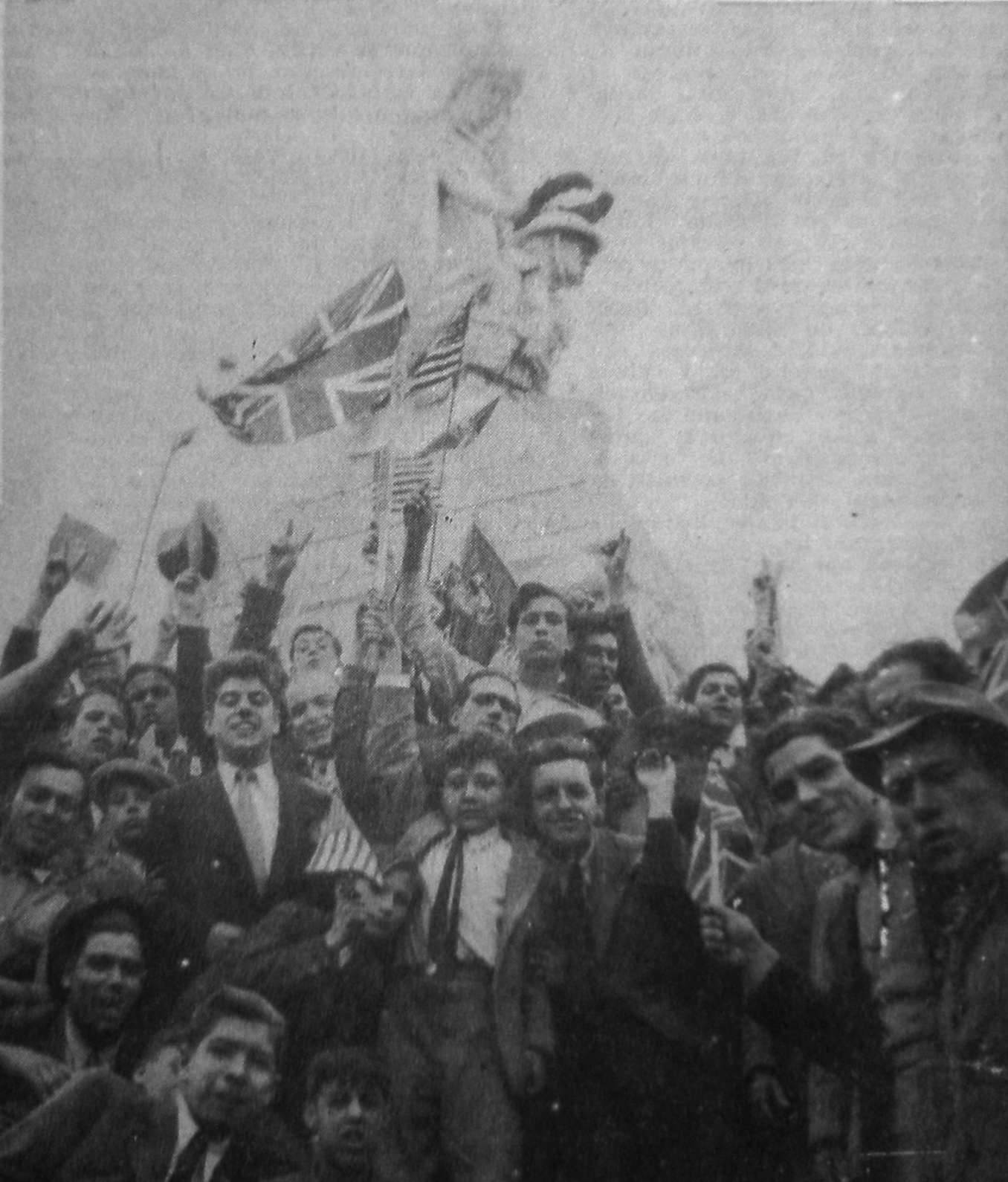
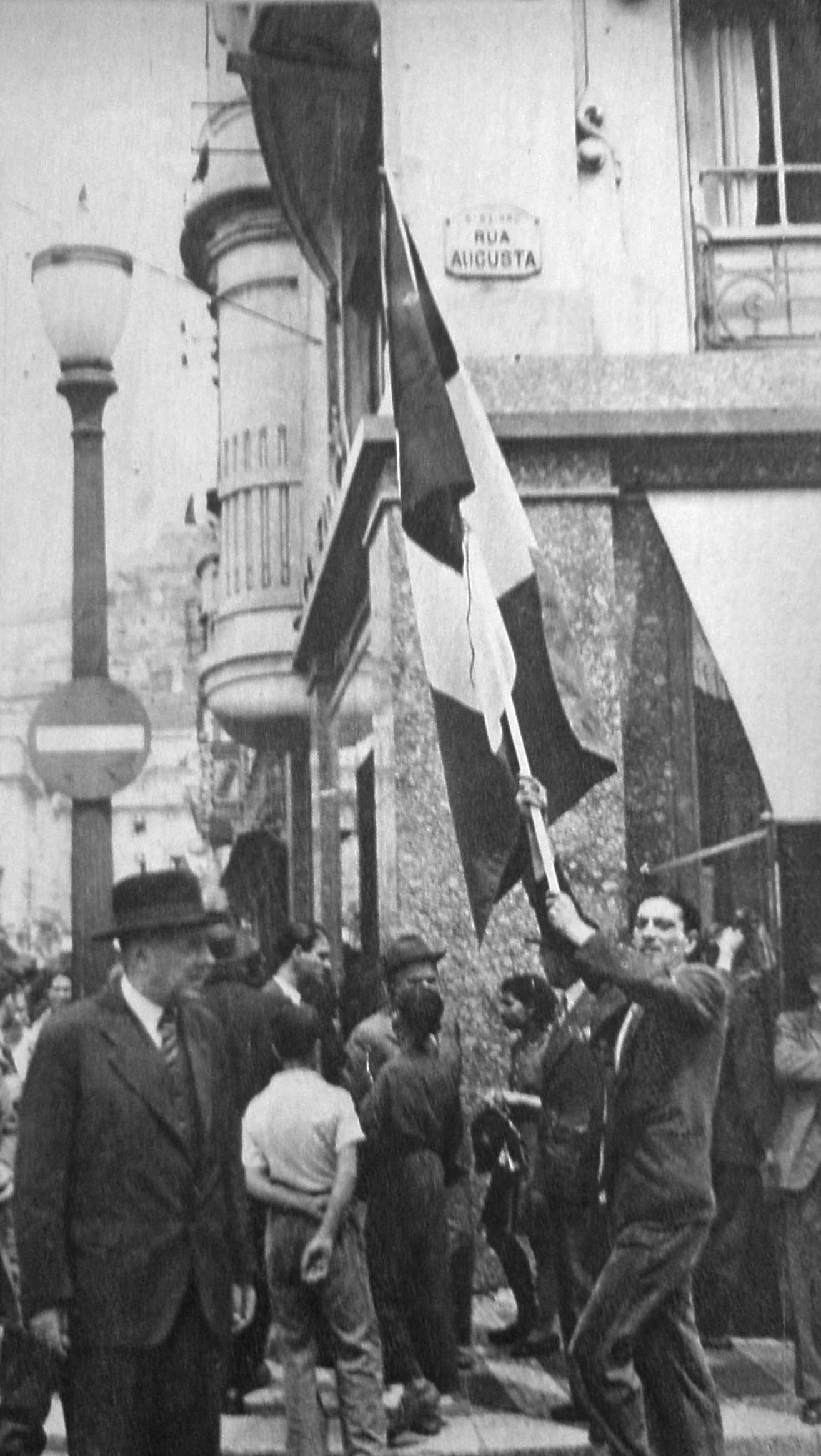
.
The comemorations in downtown Lisbon.
("Vida Mundial Ilustrada" and "Mundo Gráfico" magazines/ Hemeroteca de Lisboa)
Another note states that “the well-known communist maestro LOPES GRAÇA and other unknown individuals were seen leading several subversive demonstrations, including one that attempted to rob the Café Martinho”. In Régua, “the following stood out, by cheering the Soviet Union and shouting “deaths” to the Portuguese Gestapo: the security guard SOTERO, who despite being illiterate, has always been hostile to the situation; CLAUDINO CLEMENTE, warehouse employee at Casa do Douro; MANUEL PAIXÃO, tavern keeper; ANGELO MONTEIRO, foreman”.
In addition to naming some, other challenges to the regime were also listed, even when it was not possible to point out the culprits. In Crato, there were no riots, but “cheers to Russia and Freedom” were often heard, and the biased spirit of the people who released them, was evident (…). It is true that this was helped by the generosity of two owners of drinking establishments who, with the good intention of celebrating the auspicious event, offered wine to the people”. In Campo Maior, it was possible to “hear cheers for the victorious nations, the Allies, Carmona and Salazar, the United States, England and Brazil, and also a single cheer for Russia in a weak voice that could not be identified”.
Some people paid for their excessive enthusiasm with prison. In Ponte de Sôr, the secretary of the Municipal Council arrested a 19-year-old carpenter for cheering for Russia. He was taken to the Police station, “detained for two days, and after being reprimanded, he was handed to his father and mother, without any formal procedure, since he was a minor”.
The demonstrations on the 8th were full of speeches and other initiatives that took place in the country’s main public spaces. From the reports, it is clear that in most cases there is an organizational structure that does not always openly confront the situation, but leaves messages between the lines.
New demonstrations were scheduled for May 9th. In particular, demonstrations of gratitude were announced in front of the American and English embassies in Lisbon. The opposition structures spread this appeal outside the capital, but in the meantime Salazar put a stop to the excitement and prohibited new celebrations.
Even so, a huge group of people set off from Almada with the aim of crossing the river and reach Lisbon. The local police mobilized all its troops and headed to Cacilhas to prevent them from boarding the boats and cross the Tagus. There were no incidents and people ended up demobilizing...
However, the strength of the streets continued to be felt and the National Union - the Government party and the only allowed - took advantage of it, scheduling a large demonstration in Lisbon on May 19th - a Saturday - to thank Salazar for keeping Portugal out of the war...
Thousands of people came from all over the country for what was considered "a great demonstration of national unity".
Carlos Guerreiro
Fontes/ Sources:
Torre do Tombo § Diário de Notícias § Diário de Lisboa § o Século § O Século Ilustrado § Vida Mundial Ilustrada § Mundo Gráfico
