
Corte Real
Captain: José Narciso Marques Júnior
Type: Merchant Steamer
Tonnage: 2,043 GT
Owner: Companhia de Navegação Carregadores Açoreanos
Port: Ponta Delgada
Built: Netherlands

Crew and passengers of the "Corte Real"
(Picture: Século Ilustrado/ Hemeroteca de Lisboa)
Jorge Soares de Andrade, the first officer of the Corte Real, was shocked by the order from the German commander: his ship was going to be sunk.
He tried to argue, but the commander of the German submarine told him that the cargo manifest included goods destined for Canada — a country at war with Germany.
The shipment was considered contraband, and the Corte Real would be sunk as soon as the passengers and crew had abandoned ship.
Soares de Andrade managed to convince Lieutenant Commander Hans Werner Kraus to speak with the Corte Real’s captain. He knew a little German and was certain — as he would later emphasize in the inquiry conducted by the navy — that he “could clarify any doubts that might arise.”
The first officer crossed the 200 meters between the submarine U-83 and the Corte Real in a lifeboat to inform Captain José Narciso Marques Júnior of the German’s intentions. Júnior wasted no time and made the return trip himself to try and prevent the seemingly routine voyage from turning into a tragedy.
It was October 12, 1941, in the midst of World War II, but nothing had led him to believe he would face such a situation.
He was aware that two Portuguese ships — the Exportador I (June 1, 1941) and the Ganda (June 20, 1941) — had been sunk by submarines, and that several others had been intercepted by both Germans and British forces since late 1939.
In some cases, foreign nationals had been “captured” during boardings, but never before had there been a direct threat of sinking like this.
Portugal was neutral, and the cargo was headed to a neutral port in the United States.
On board were around 710 tons of cargo. Newspapers at the time reported that it included canned goods, cork, port wine, and Swiss watches. There were also rumors of tungsten (wolfram), but this was later denied…

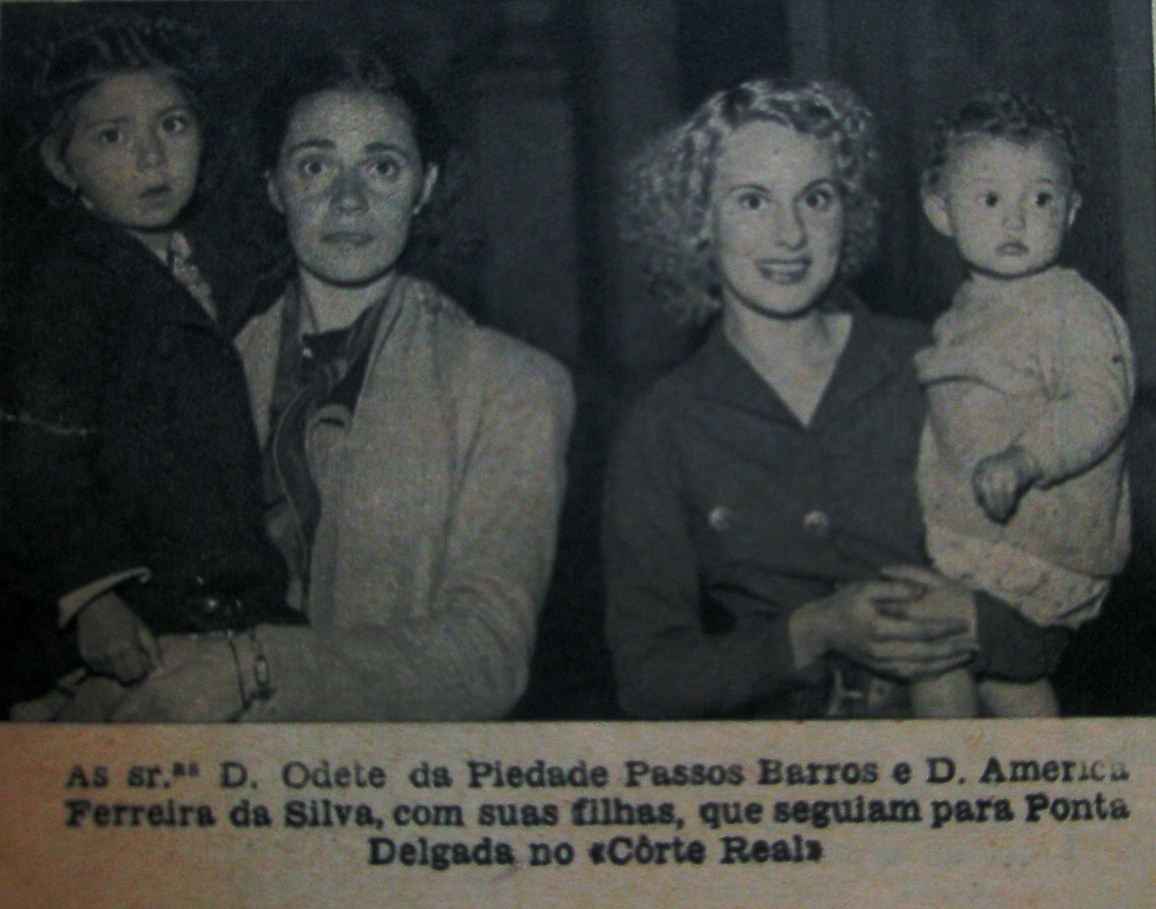
The two passengers with their daughters.
The captain with crew and passengers
(Pictures: Mundo Gráfico e Século Ilustrado / Hemeroteca de Lisboa)
The passengers included two women with their daughters — who had boarded in Lisbon bound for Ponta Delgada — and two foreigners, one French and one American — who had boarded in Oporto en route to the United States.
The voyage had started on October 7, from Lisbon to Leixões. The transatlantic crossing toward the U.S. began around 6:00 p.m. on October 11, 1941, when the Corte Real left the Douro bar heading for Funchal and New York. On the return trip, they would stop in the Azores.
The large Portuguese flag and the country’s name painted on the hull clearly identified the ship.
When a German plane flew over the next morning, there was little concern on board. That changed at 11:45 a.m., when a submarine fired a shell over the ship — a warning shot to make them stop. As the engines were already being stopped, a second shot was heard.
Using signal flags, it was communicated that the commander of the belligerent vessel wished to see the ship's documentation and cargo manifest.
The inspection lasted about an hour and a half, when the German commander issued his warning. The Corte Real was carrying watches and other precision instruments from Switzerland, destined for Canada. That alone, Kraus argued, was enough reason to sink the ship.
The Portuguese captain's justifications and pleas made little difference. Marques Júnior explained that the Swiss instruments had been loaded in Genoa, Italy, an ally of Germany; that he was willing to return to Lisbon to offload that part of the cargo; and that he could even throw it overboard right there if they preferred.
He also promised, on his word of honor, that until the end of the war, he would no longer transport goods to belligerent nations at war with Germany.
Hans Werner Kraus was unmoved. They had half an hour to abandon ship.
The return to the Corte Real was made in the company of the first officer and a sailor from the U-83. The 36 crew members, six passengers, and their essential belongings were placed into two whaleboats, but one was not seaworthy, and all the castaways had to squeeze into just one. Their belongings — suitcases and documents — were left behind.
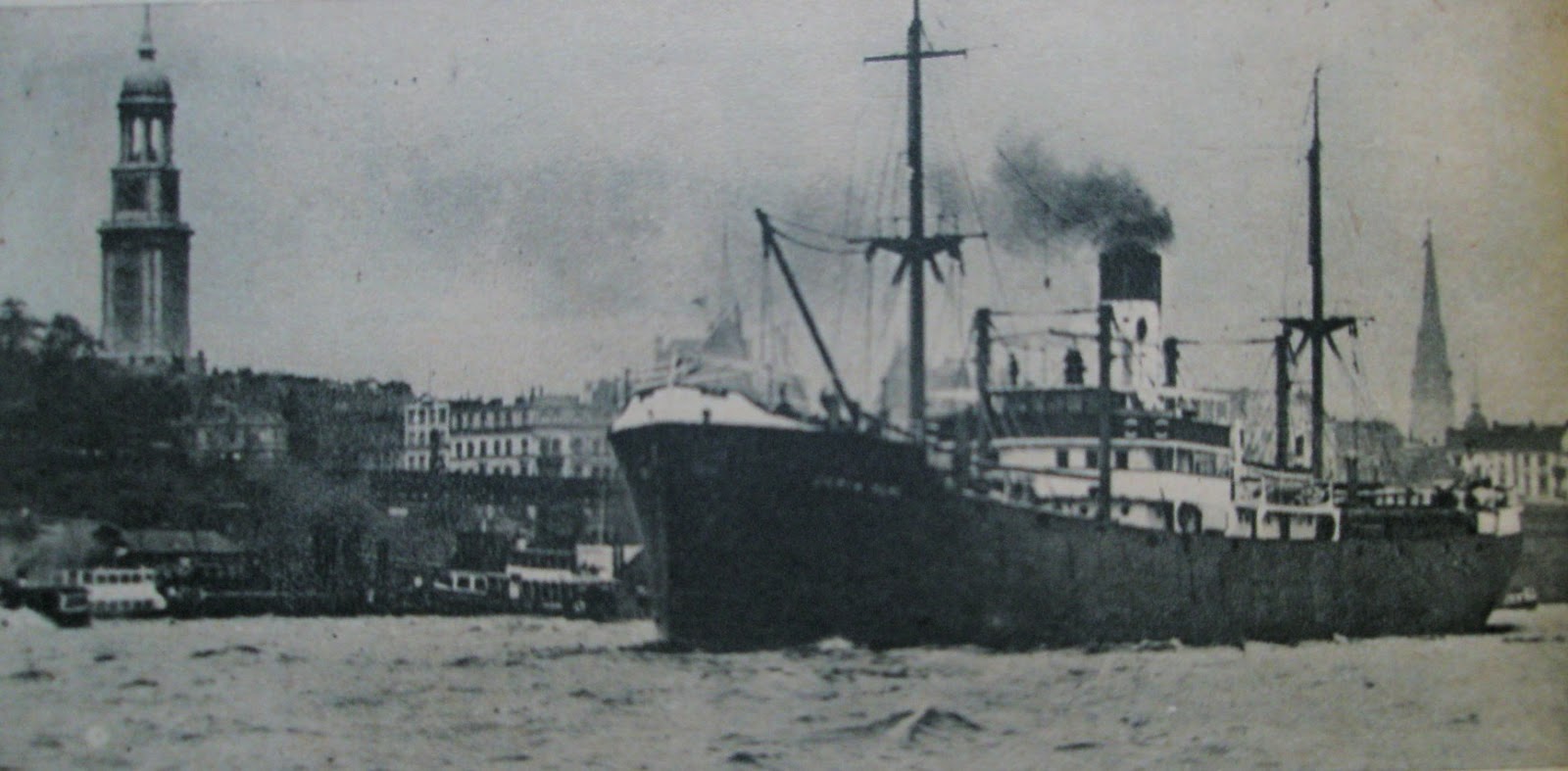
The "Corte Real" and its captain José Narciso Marques Júnior
(Pictures: Século Ilustrado/ Hemeróteca Municipal)
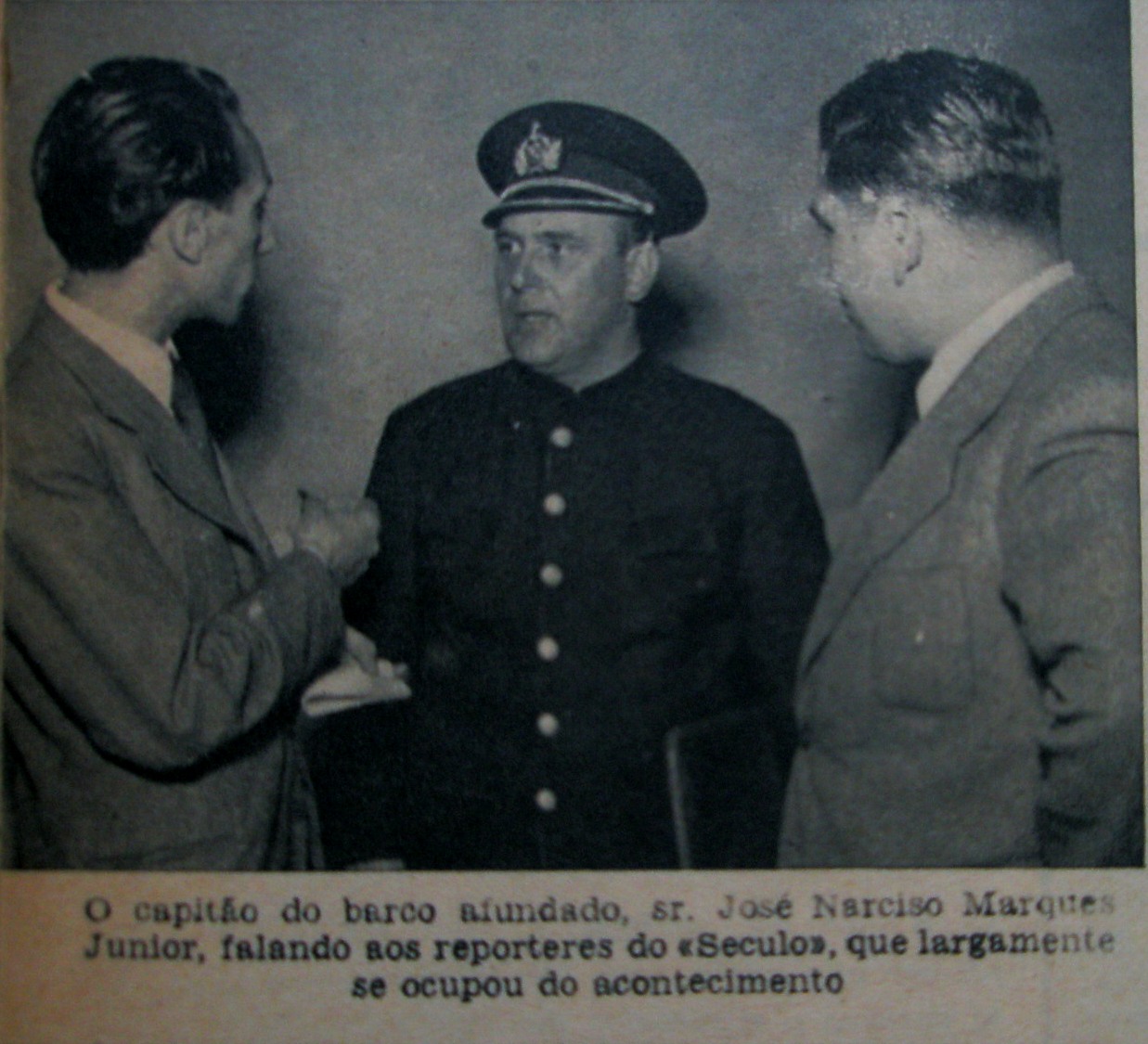
A smaller dinghy was then lowered, but space was still tight.
At 2:00 p.m., the two boats reached the submarine, which then fired nine shells from its deck gun at the Corte Real. One or possibly two torpedoes followed, according to different reports.
Within half an hour, the sea had swallowed the Ship.
At Captain Marques Júnior's request, the lifeboat and dinghy were towed by the submarine for about 20 nautical miles toward the coast. During the journey, the two women and their children were invited aboard the German vessel.
At around 60 miles — roughly 100 kilometers — from the Portuguese coast, the Germans ended the tow, as they could not risk approaching any closer.
The women returned to the lifeboat with two blankets offered by the German commander, who also left milk, bread, and water for everyone. They were also given instructions for the route to follow.
A signal flare gun was left behind, along with the promise that the German authorities would be informed and that this information would be relayed to the Portuguese government.
By 5:30 p.m., they were alone. Over the next 13 hours, the Corte Real survivors managed to row about 35 miles, and in the early hours of the morning, they saw the light of the Roca Cape lighthouse.
Soon after, they encountered the A Deus, a fishing boat from the port of Fuzeta, which offered to tow them to Lisbon…
Near the coast, they were overflown by a Portuguese aircraft that had been dispatched to look for them, and near Cascais, a pilot boat from the Tagus bar completed the tow to the old Navy Arsenal, west of Terreiro do Paço, where authorities were waiting for them...
They were safe.
In the days that followed, despite censorship, the Portuguese press erupted in outrage at the sinking. Hostility toward the Germans intensified, though this would not prevent other sinkings in the future.
Carlos Guerreiro
Sources:
National Archives UK, Kew (GB) § Arquivo Histórico da Marinha (PT) § Arquivo Histórico do MNE (PT); § uboat.net. § Lista dos Navios da Marinha Portuguesa, datas 1939 a 1945 § Torre do Tombo § Hemeroteca de Lisboa
