

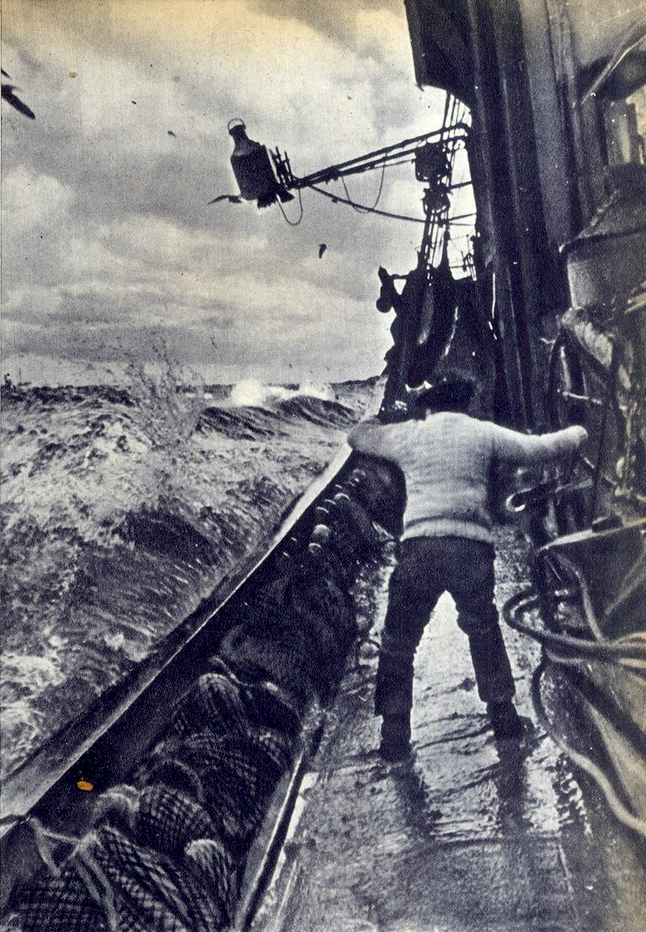
Portuguese fishing vessel in the White Cape area in 1942
(Picture: Mundo Gráfico magazine, 30 November 1942, Hemeroteca Digital)
Fafe
(Portugal)
Captain:
Type: Arrastão Trawler
Tonnage:
Owner:
Homeport:
Built:
Azevedo Gomes
(Portugal)
Captain:
Type: Trawler
Tonnage: 296 GT
Owner: Soc. de Pescadores Arrábida, Lda.
Homeport: Lisbon
Built: Bremerhaven, Germany
Alfacinha
(Portugal)
Captain:
Type: Trawler
Tonnage: 359 GT
Owner: Comp. Portuguesa de Pesca
Homeport: Lisbon
Built: Aberdeen, UK
Estrela do Norte
(Portugal)
Captain: Zeferino das Chagas
Type: Coastal Trawler
Tonnage: 6,7 TB GT
Owner: Zeferino Carapinha das Chagas
Homeport: Sezimbra
Built: Nazaré, Portugal
The crew from the fishing steamer “Fafe” didn't knew where to hide when a plane appeared in the night firing machine gun bursts that seemed to be heading in their direction. Despite the scare, apparently none of the shots hit the target, with no victims or damage being registered.
The attack took place around 9.20 pm on April 18, 1942, 18 miles from Vila Nova de Milfontes (South Portugal), when the “Fafe” was heading towards fishing grounds in Mauritania. With no radio on board the attack would only be communicated to the authorities on his return to port – at 9 May – when the fishing master learned that he had not been the only to suffer an attack that night, as “Alfacinha” and “Azevedo Gomes” - two other fishing vessels - had also lived a similar situation.
Both were already returning from Mautritania when, in the vicinity of Cape Saint Vicente, in the Algarve, they were attacked. Like other Portuguese ships, they were fully illuminated and had the national flag colors painted on the hull. They only did not had any flags painted horizontally on the upper deck, a recent order issued by the Naval Staff, which had caught the ships already on their way to the African fishing grounds.
It was around nine in the evening when “Azevedo Gomes” was machine-gunned for about five minutes by a plane – possibly the same that fired at “Fafe” – although he was not hit. The attack was carried out from a position in wish the crew believed it was impossible not to see the national marks on the side of the steamer.
“Alfacinha” was the least lucky of the three. Around 9.30 pm and during 20 minutes they were the targetet by different bursts. At one point, the order was given "to stop the machine, during 5 minutes, with the intention of facilitating the recognition of our nationality (...), putting it back in full force when we saw that the gusts did not even stop" .
The attack was so intense that preparations were made for eventually abandoning ship.
At least three bullets hit their target. One on the “deck (…), another on the roof of the bridge and another on the nets stored on the deck of the whaleboats”.
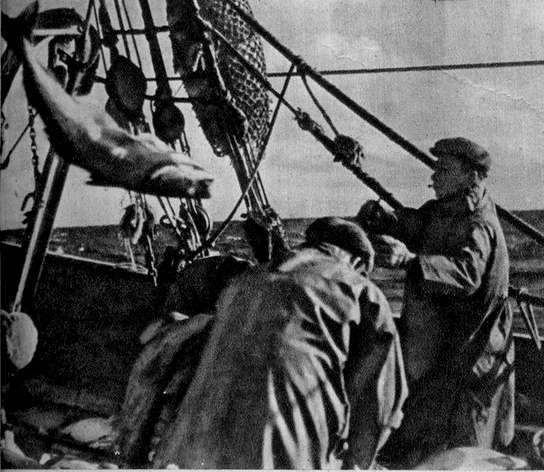
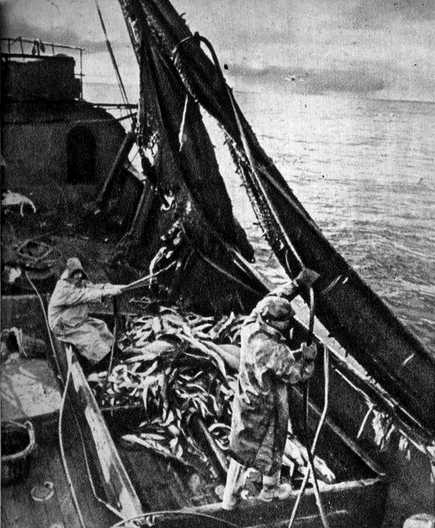
More photos from the same news report on fishing in White Cape, Mauritania, from the magazine "Mundo Gráfico"
(Mundo Gráfico magazine, 30 November 1942, Hemeroteca Digital)
One of the bullets was recovered and handed over to the authorities, who compared it with ammunition from a FW200 – Condor from the Luftwaffe (German Air Force) that had performed an emergency landing in Apulia, in Vila do Conde, months before.
“On the 2nd of June, the nationality of the attacking aircraft was identified as being German, by comparing the marks of the projectile found in the “Alfacinha”, with the ammunition seized from a German four-engined plane”, clarifies a report by the Naval General Staff.
Other attacks
These three steamers were not the only Portuguese fishing boats attacked off our coast. On March 10, 1942, the "Cabo de São Vicente" trawler had been sunk off Ericeira. The bomb attack was also carried out by a German plane and it was pure luck that none of the crew was killed (read here).
Until the end of 1942, another attack would take place, also by a plane, on the fishing motor boat “Estrela do Norte”.
It happened at 8.00 am on December 3, 15 miles west of Cabo Espichel, when the ship was overflown by three planes that the men could not identify. One of the aircraft dropped a bomb that exploded very close to the vessel.
Zeferino das Chagas, master of the “Estrela do Norte”, described them as a large plane with four engines, followed by two others with just two. The biggest one flew lower than the rest, but it was one of the others who launched the “bomb” that plunged into the sea and exploded underwater, revolting the surface. A bit later, something appeared on the surface, giving off a very light smoke. Fortunately, and despite the proximity and the explosion, no one was hit.
Carlos Guerreiro
Sources:
Arquivo Histórico da Marinha (PT) § Lista dos Navios da Marinha Portuguesa, datas 1939 a 1945 §
